ergo, Summer 2024

Bovell, Furton, Haydel, Stroud to receive Distinguished Service Awards Friday

Four alumni of the Indiana University Maurer School of Law will be presented with Distinguished Service Awards Friday (Sept. 13) in Bloomington.

Dino Bovell, Matt Furton, Augie Haydel, and Terrance Stroud will be honored September 13 during a meeting of the school’s Alumni Board and before reunions for the classes of 1964, 1974, 1999, and 2014.

The Distinguished Service Award was established in 1997 to recognize graduates of Law School who have distinguished themselves in service to their communities and the school in ways far exceeding traditional business, professional, and civic duties.

Through their hard work, passion, and accomplishments, these alumni define Indiana Law's ideals for community service and serve as accomplished role models for our Law School and the greater community.

“It is always an honor to present the Distinguished Service Awards to some of our outstanding alumni,” said Indiana Law Dean Christiana Ochoa. “Professionally, this year’s recipients represent excellence in private practice and public service. But their dedication and commitment to improving their respective communities—from Los Angeles to New York—and in their extraordinary representation of the Law School makes them especially worthy of recognition.”

This year’s recipients are:
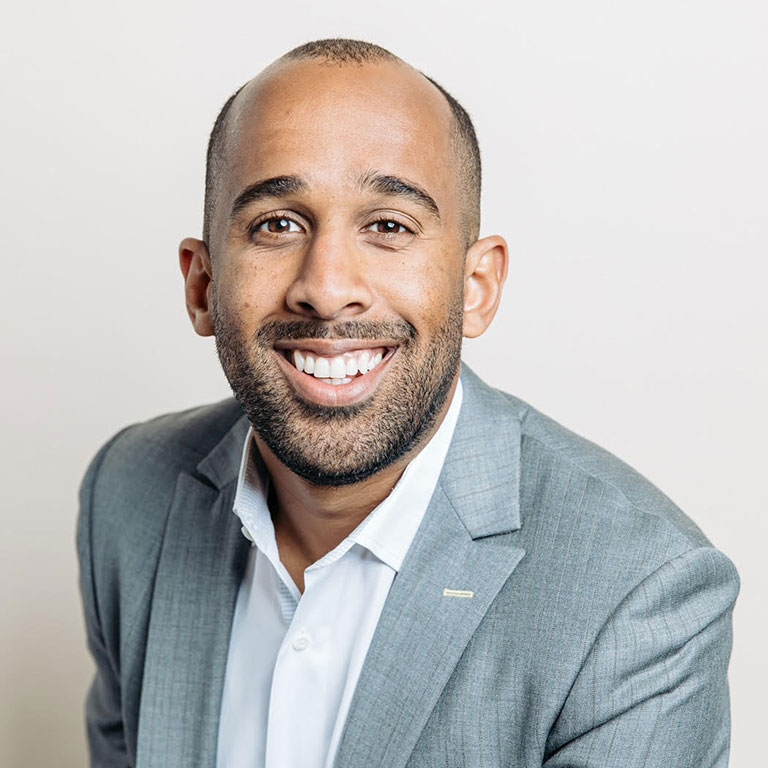
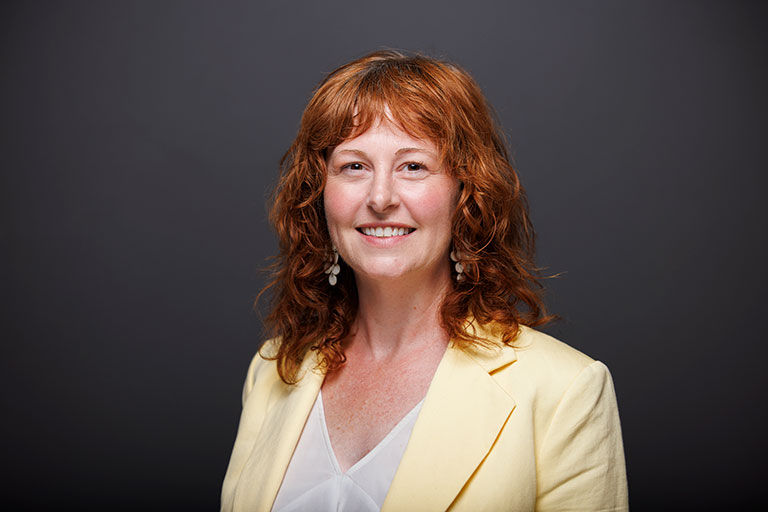
A portrait of Dino BovellDino Bovell ’14 is a first-generation Guyanese American born and raised in Yonkers, New York, and the first member of his family to graduate from college and law school. He moved to Los Angeles in 2021 to further his ambitions to amplify Black and Brown voices in popular culture and expand the sphere of opportunities and influence for underrepresented communities. He is currently a director of business affairs with NBCUniversal (“NBCU”), where he is responsible for negotiating the commercial deal points with the production companies and behind-the-scenes/on-screen talent that develop, produce, and feature in NBCU’s premium television and streaming content. Bovell has worked on a variety of projects across film and television including the Olympic games, Sunday Night Football, Christopher Nolan’s summer blockbuster Oppenheimer, and Saturday Night Live. He formerly worked as an employment lawyer with two preeminent international law firms in New York City.

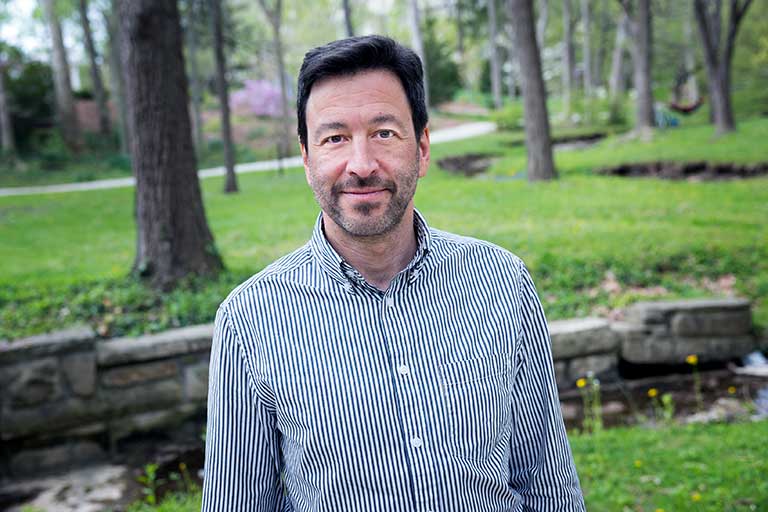
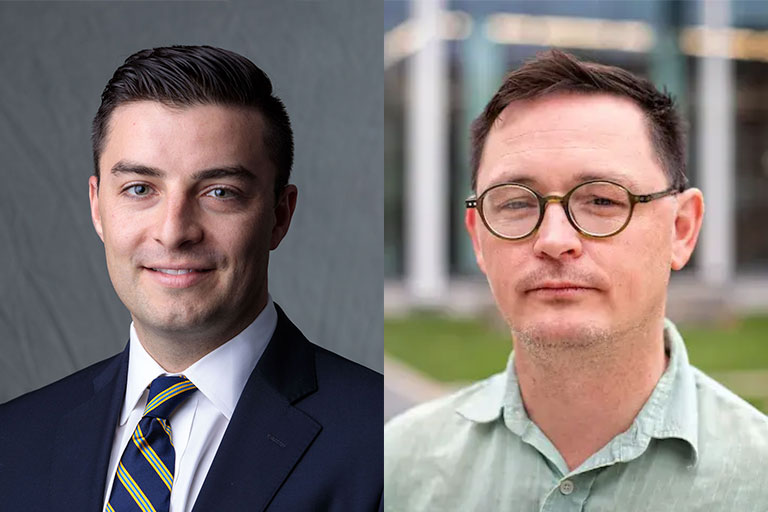
A portrait of Matthew FurtonMatthew Furton ’95 is a partner and former co-chair of the 240+ lawyer Litigation Department at Locke Lord. He has a national, complex commercial and IP litigation practice. Furton has handled trials, appeals and arbitration proceedings in more than 25 states. His cases include contract, business tort, and fraud claims as well as statutory actions such as RICO, consumer fraud, shareholder derivative actions, and antitrust claims. In the IP area, Furton handles copyright and trademark infringement, trade secret misappropriation, false advertising and defamation claims. He handles cases in any industry, but many of his cases arise from the use of information technology or the business of insurance. On multiple occasions, Furton has secured injunctions in favor of entire industries. Representing trade associations and leading companies, Furton has secured judicial relief prohibiting Illinois agencies from enforcing recently enacted statutes. His clients include Fortune 500 companies that repeatedly turn to him for their most challenging cases. His clients also include entrepreneurs and mid-market companies that need an efficient solution to a commercial dispute.
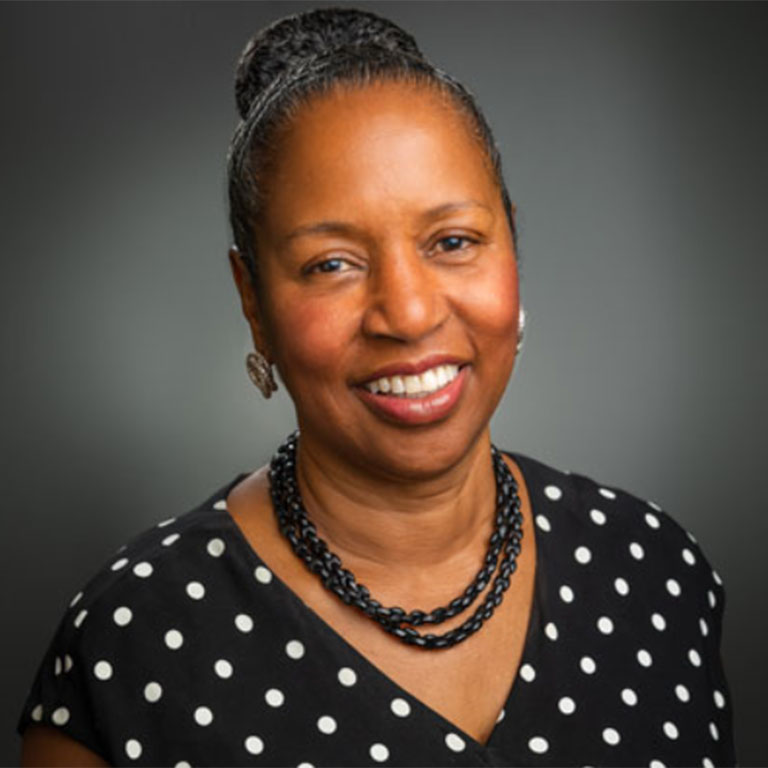
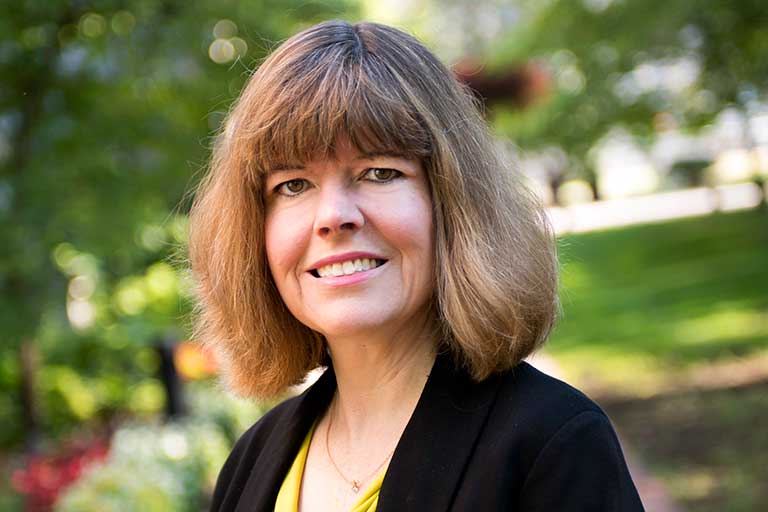
A portrait of Augie HaydelAugustavia “Augie” Haydel ’85 is general counsel of L.A. Care Health Plan. In this role she provides and arranges for legal counsel to L.A. Care's Board of Governors and to senior management. Haydel's duties involve a wide array of activities, including advice and counsel on health care legal issues, public law and government practice issues, board administration and governance issues, litigation activities, contract strategies and negotiations, and various other general and specialized legal topics. Before joining L.A. Care, she served for 10 years as counsel at WATTS Health Systems, Inc., in Los Angeles. Prior to that position, she was in private practice. She also has served as an assistant district attorney in the King's County District Attorney's Office in Brooklyn, New York, and worked as a Market Research Analyst for the Indiana Business Development Foundation in Indianapolis.
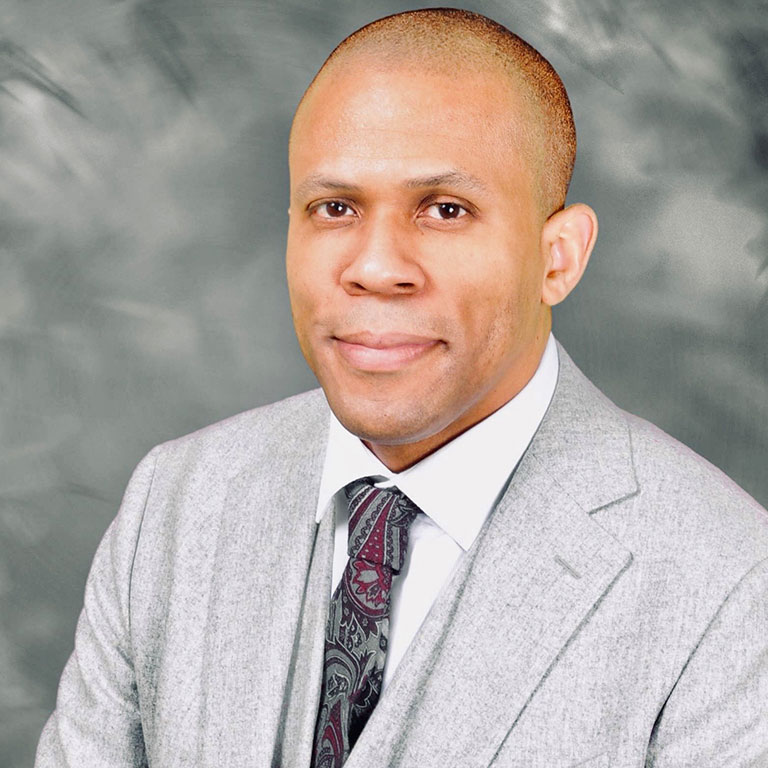
A portrait of Terrance StroudTerrance Stroud ’03 serves as the Deputy Commissioner at the Department of Social Services (DSS) overseeing the Office of Training & Workforce Development. He leads the development and implementation of the agency’s learning strategy. DSS is the largest municipal social services agency in the nation and has an operating budget of $9.7 billion and over 18000 employees. Stroud is a published author who has been honored by elected officials on a city, state, and federal level for his work in government and his contributions to the community. His distinctions also include being named a Brooklyn Tech Distinguished Younger Alumnus, a Home Reporter News “Star of Brooklyn", a City and State “Top 40 Under 40,” Black Enterprise Modern Man of Distinction, a recipient of the IU Maurer School of Law Samuel S. Dargan Outstanding Alumni Award and the City & State Inaugural Above & Beyond: Innovator Award, and named to the City & State Higher Education Power 100. Stroud was appointed to the New York State Staff Development Advisory Committee and was elected to the National Staff Development Training Association’s Executive Advisory Council. Stroud is also co-chair of the American Public Human Services Association’s Equity Diversity and Inclusion Peer Community. President Biden appointed Stroud to serve as a Commissioner on the White House Commission on Presidential Scholars. Stroud is an adjunct professor of law overseeing the Law School’s New York Externship Program and is the first Black recipient of the school's Adjunct Faculty Teaching Award. He was the inaugural Global Leader in Residence at the Indiana University Hamilton Lugar School of Global and International Studies, where he led the Global Leaders & Professionals Program.

The recognition will take place in the DeLaney Moot Court Room at noon.

146Total students enrolled  

164Median LSAT  

3.91Median UGPA

50%Women

18%Minority  

58%Non-resident  

Sotomayor cites Maurer faculty member in SCOTUS' decision on Alabama bite mark case

The case of an Alabama man convicted of murdering his wife in 1985 will not be reviewed by the U.S. Supreme Court, despite evidence that, nearly 40 years later, has been “wholly discredited.”

The Supreme Court denied certiorari in the case of McCrory v. Alabama, with Justice Sonia Sotomayor citing research from Indiana University Maurer School of Law Professor Valena Beety in her concurring agreement with the court’s decision.

Charles M. McCrory was convicted for the murder of his wife, Julie Bonds, based in large part on expert testimony from an odontologist who matched McCrory’s teeth to two bite marks on Bonds’ shoulder. But the odontologist retracted his testimony later, writing that science has revealed the limitations of bite mark evidence. McCrory had requested a new trial, which was denied by the Court of Criminal Appeals of Alabama.

“This petition raises difficult questions about the adequacy of current postconviction remedies to correct a conviction secured by what we now know was faulty science,” Sotomayor wrote. “One in four people exonerated since 1989 were wrongfully convicted based on false or misleading forensic evidence introduced at their trials. Hundreds if not thousands of innocent people may currently be incarcerated despite a modern consensus that the central piece of evidence at their trials lacked any scientific basis.”

Sotomayor wrote that the issue of due process claims like McCrory’s have “yet to percolate sufficiently through the federal courts.” The justice encouraged legislatures not to wait for a constitutional remedy in cases of wrongful convictions based on faulty science, and instead pass postconviction statutes to address the problem.

Drawing on cases from California and Texas, Sotomayor noted the power state legislatures have in passing statutes to address wrongful convictions. Adding those tools to the state courts’ arsenal would allow innocent people to attain freedom sooner, the justice wrote.

Sotomayor cited Beety’s 2020 Houston Law Review article, “Changed Science Writs and State Habeas Relief,” which reviewed the growth of state-level changed science writs and examined how other states can adopt those tools to review habeas petitions based on scientific evidence.

“The adoption of these changed science writs empowers courts in state habeas proceedings to reverse wrongful convictions, rather than be hindered by procedure,” Beety wrote.

Beety, a former federal prosecutor and innocence litigator, has written extensively on wrongful convictions, forensic evidence, prosecution, and incarceration. She is the co-editor of The Wrongful Convictions Reader, and author of the award-winning book Manifesting Justice: Wrongly Convicted Women Reclaim Their Rights. She is also a co-author of the treatise Scientific Evidence and the litigation guide Miscarriages of Justice: Litigating Beyond Factual Innocence. She is a founding board member of the new Indiana Innocence Project.

Prof. Donna Nagy

Donna Nagy to receive prestigious Sonneborn Award

For the third time in history, a faculty member of the Indiana University Maurer School of Law will be honored with the university’s Sonneborn Award.

Donna Nagy, the C. Ben Dutton Professor of Law and executive associate dean, will be recognized with a number of other distinguished award-winners at a ceremony this fall. She follows Leandra Lederman, William W. Oliver Chair Emerita in Tax Law (2019), and Walter W. Foskett Professor of Law Susan H. Williams (2014) as law faculty who have earned the honor.

The Tracy M. Sonneborn Award honors faculty for accomplishments in the areas of teaching and research. The award, named for the late eminent scientist Professor Tracy M. Sonneborn, is given to an exemplary researcher who is also well known as an exemplary teacher.

“These faculty members have reined their pedagogy, research, and modes of engagement to the highest standard, serving as inspiration not only for our campus but for their fields and every community influenced by their endeavors,” said Rahul Shrivastav, IU Bloomington provost and executive vice president. “I am immensely proud to work alongside these trailblazing scholars.”

Shrivastav announced the Sonneborn, Burgan, and Venkat awards and the recommendation of IU Provost Professors and Herman B Wells Professors June 11.

All of the award recipients were recommended by a faculty committee sponsored by the Office of the Vice Provost for Faculty and Academic Affairs and will be celebrated at a reception in the fall 2024 semester. Nagy will deliver a campus-wide lecture in spring 2025.

“This is such a well-deserved honor for Professor Nagy and all of us at the Law School are so proud that she’ll be honored with a Sonneborn Award by the university,” said Dean Christiana Ochoa. “Professor Nagy has been an invaluable part of our school for nearly two decades, and her service to our campus, school, faculty, and students as a teacher, scholar, and administrator are simply unparalleled.”

Nagy is the C. Ben Dutton Professor of Business Law and executive associate dean at the Maurer School of Law. She teaches and writes in the areas of securities litigation, securities regulation and corporations, and she has served in her administrative role for most of the past decade. Her internationally recognized scholarship includes two co-authored books: one on the law of insider trading and a casebook on securities litigation, enforcement and compliance. She has published extensively in distinguished law journals on matters including insider trading, government officials and financial conflicts of interest, and securities enforcement remedies.

Nagy has been invited to testify on multiple occasions in hearings before U.S. congressional committees and is also a frequent speaker at law schools and professional conferences. She is an elected member of the American Law Institute and served as an appointed member of the National Adjudicatory Council of the Financial Industry Regulatory Authority and the Corporate Laws Committee of the American Bar Association. She has held numerous leadership positions in the Association of American Law Schools and received an Outstanding Mentor Award from its Business Associations Section.

Nagy began her teaching career in 1994, after working as an associate with Debevoise & Plimpton in Washington, D.C.


Prof. India Thusi

Thusi earns John Hope Franklin Prize

Professor India Thusi received the John Hope Franklin Prize, recognizing exceptional scholarship in the field of Race, Racism and the Law, at the Law and Society Association's 2024 Annual Meeting in early June.

Thusi’s winning work, “The Racialized History of Vice Policing,” was published in the UCLA Law Review in 2023.

“The article provides an enduring scholarly contribution at the intersection of policing, abolition, and legal history,” according to the LSA. “Thusi adopts an abolitionist framework and provides a much-needed analysis of vice policing as a mechanism to sustain racism and racialized marginalization. This well-written and compelling article is the beginning of a rich and important project that will continue to open up new avenues in research on race, racism, and law for years to come.”

The Franklin Prize is awarded for an article published in the two calendar years prior to the award year. The competition is open to all forms of law and society scholarship, to authors at any stage of their careers, and to authors from any country of origin. Articles may be published in any scholarly journal, including socio-legal journals, journals in other disciplines, and law reviews, or may be a chapter in a book volume.

Thusi is the Charles L. Whistler Faculty Fellow at the Law School, and a senior scientist at Indiana University’s Kinsey Institute. Her research examines racial and sexual hierarchies as they relate to policing, race, and gender. Thusi’s research is inextricably connected to her previous legal experience at organizations like the American Civil Liberties Union, Human Rights Watch, the Center for Constitutional Rights, and—most recently—The Opportunity Agenda, a social justice communication lab that collaborates to effect lasting policy and culture change.

She was selected as a Fulbright U.S. Global Scholar for 2020-2023.

“I am so pleased to see Professor Thusi’s scholarship recognized by the Law and Society Association,” said Indiana Law Dean Christiana Ochoa. “The John Hope Franklin Prize is a prestigious honor won in the past by scholars at Northwestern, Harvard, and UC-Berkeley, and I am proud Professor Thusi will join them.”

The Law and Society Association is an interdisciplinary scholarly organization committed to social scientific, interpretive, and historical analyses of law across multiple social contexts.

3L Pledge Campaign

$22,780Total raised by the Class of 2024 3L Pledge Committee

40%40 percent of this year's graduating class contributed to the 3L Pledge Campaign

The 3L Pledge campaign is an annual event that encourages members of the 3L class to give back to the Law School after they graduate. Thank you to this year's campaign committee: Mrunal Vansadia, Chair; Gerardo Alvarez; Denisha Chetty; Jade Doty; Erika Helding; Zoe Marshalleck; Matt Sheffield; Sarah Smith; and Wayne Tuckson.
Prof. Rob Fischman

Fischman elected to Defenders of Wildlife board

An environmental law professor at the Indiana University Maurer School of Law has been elected to the board of directors of a national conservation organization dedicated to the protection and restoration of imperiled species and their habitats in North America.

Rob Fischman, the George P. Smith, II Distinguished Professor of Law and an adjunct professor at the O’Neill School of Public and Environmental Affairs, was elected to the Defenders of Wildlife board on May 21.

His teaching, research and service align closely with the organization’s conservation vision of a future where diverse wildlife populations in North America are secure and thriving, sustained by a network of healthy lands and waters.

“Prof. Fischman has been a fierce advocate on behalf of the environment and our natural wildlife throughout his entire career,” said Indiana Law Dean Christiana Ochoa. “His election to the board of Defenders of Wildlife is an outstanding recognition of all that Rob does to help make our world a cleaner and safer place.”

Defenders of Wildlife was founded in 1947. The organization is dedicated to the protection of all native animals and plants in their natural communities by transforming policies and institutions and by promoting innovative solutions. Its Board of Directors is comprised of professionals from all walks of life—academic, scientific, legal, financial and business—who share a common love for our nation’s wildlife and natural heritage. Their combined experience and dedication play an extremely important role in charting the future of Defenders and the wildlife conservation movement.

Fischman, one of the country’s leading environmental law scholars, joins more than a dozen other board members who help advance the organization’s mission.

Fischman’s research explores the relationship between law and conservation implementation. He is one of very few professors to publish in high-impact, peer-reviewed scientific journals as well as law reviews. He is a co-author of the leading casebook on public land and resources law and his book on management of the National Wildlife Refuge System has become the standard reference in the field. He writes about public land management, endangered species recovery, federalism, adaptive conservation, climate change, and environmental impact analysis.

Stevens Foundation selects four students as 2024 Fellows

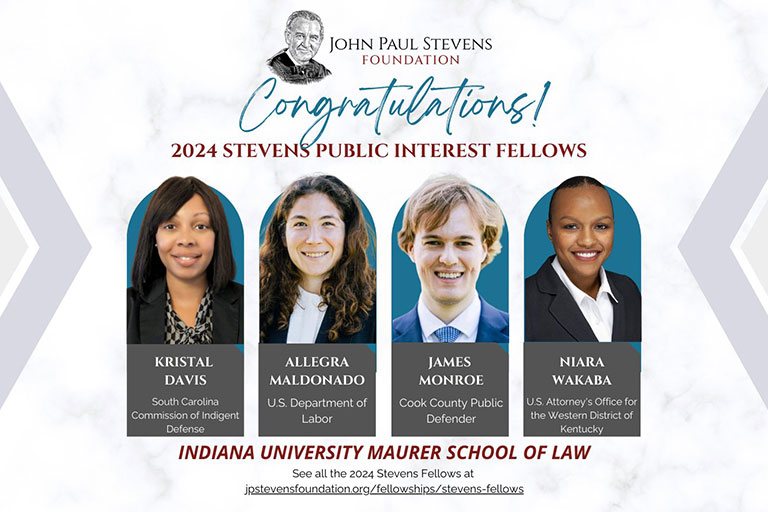
The John Paul Stevens Foundation has chosen four Indiana University Maurer School of Law students to serve as 2024 Stevens Fellows this summer. The Foundation made the announcement June 26.

Selection as a Stevens Fellow comes with $12,000—half from the Foundation, half from the Law School—to help offset the cost of unpaid public interest work over the summer. This year’s Stevens Fellows are Kristal Davis ’25, from Lansing, Michigan; Allegra Maldonado ’25, from Indianapolis; James Monroe ’25, from Naperville, Illinois; and Niara Wakaba ’26, from Louisville.

“The Law School is proud to have four of our students selected as 2024 Stevens Fellows,” said Indiana Law Dean Christiana Ochoa. “These fellowships allow students to perform public interest work that is vital to so many across the country. We continue to be inspired by the incredible work our students do every year.”

Davis is spending the summer with the South Carolina Commission on Indigent Defense, Maldonado is with the U.S. Department of Labor in Chicago, Monroe is also in Chicago, working for the Cook County Public Defender, and Wakaba is serving with the U.S. Attorney’s Office for the Western District of Kentucky in her native Louisville.

Named after the late U.S. Supreme Court Justice, the John Paul Stevens Foundation is dedicated to promoting public interest and social justice values in the next generation of American lawyers. Through its unique fellowship program, the Foundation supports law students who spend the summer working in unpaid public interest law internships. The Fellowship Program reflects Justice Stevens’ deep belief that a dynamic and effective justice system depends on a cadre of trained and committed lawyers committed to public interest work.

According to the Foundation, approximately 74 percent of Stevens Fellows go on to work in public interest and social justice positions, including public defenders, civil rights attorneys, and advocates for children, youth, survivors of violence, families, immigrants, seniors, and others. Past Stevens Fellows now work in local, state, and federal government on housing, health care, child welfare, community services, and racial justice.

The Maurer School of Law is one of 38 law schools—and the only one in Indiana—that participates in the Stevens Fellowship program.

3L Allyson McBride

ACS selects Allyson McBride as Next Generation Leader

The American Constitution Society has named rising 3L Allyson McBride a Next Generation Leader—one of 34 across the United States—the organization announced April 11.

She is the third consecutive student selected from the Maurer School of Law, following Laura Rusk in 2023 and Ethan Dawson in 2022.

Launched in 2007, the Next Generation Leaders program recognizes and supports law school students who have shown exceptional leadership in their work with their ACS student chapters. The program offers various opportunities that empower the students to develop their leadership skills and make a long-lasting impact in their communities.

McBride was elected president of the Indiana Law ACS chapter for the 2023-24 academic year, and has led the organization’s educational and social activities since August. That includes organizing a chapter breakfast with several Law School faculty members, hosting numerous internal and external speakers, and connecting current students with alumni of the ACS chapter.

“I am excited for the opportunity to meet more people in the ACS network and strengthen my involvement with ACS on the national level,” McBride said. “I am particularly grateful for the chance to participate in trainings and receive additional career advice; I have found ACS’s clerkship programming to be immensely helpful as I prepare to apply for post-graduation clerkships.”

In addition to the American Constitution Society, McBride is also active with the Indiana Law Journal, the Protective Order Project, the LGBTQ+ Project, Public Interest Law Foundation, and was a winner of the 2024 Sherman Minton Moot Court Competition earlier this month.

ACS President Russ Feingold noted, “I’m excited to introduce this year’s class of Next Generation Leaders, whose achievements represent the future of the progressive legal movement and the promise of a multiracial democracy. The Next Generation Leaders program was created to develop and support future progressive lawyers, judges, and policymakers, and this impressive class will contribute to the growing number of Next Generation Leaders alumni, already over 400 strong, across the country.” 

“We’re grateful to the American Constitution Society for recognizing the outstanding leadership qualities embodied by our students,” said Indiana Law Dean Christiana Ochoa. “Allyson has made remarkable contributions to our Law School, and I’m excited to see the opportunities she will have through the Next Generation Leaders program.”

Study finds law students losing interest in U.S. News rankings

Prospective law students across the United States are paying less attention and giving less credence to the annual U.S. News & World Report rankings of American law schools, according to new research from scholars at the Indiana University Maurer School of Law and University of Kentucky Rosenberg College of Law.

The Decline and Fall of the U.S. News Rankings” was published this week on the Social Science Research Network by Indiana Law Professor CJ Ryan and Brian Frye, Kentucky’s Spears-Gilbert Professor of Law.

Contrary to what many in the legal education community believe, a rise in the U.S. News rankings one year does not mean the school becomes more attractive to prospective students in the next, according to Ryan and Frye.

“Changes in a law school’s U.S. News ranking don’t seem to affect the revealed preferences of prospective law students very much at all,” the authors wrote. “In fact, changes in a law school’s U.S. News ranking are apparently almost irrelevant to the revealed preferences of prospective law students.”

In other words, if a law school’s U.S. News ranking increases one year, then it should become more attractive to prospective students in the next, and vice versa.

Or so the thinking went.

Long considered the definitive source on a law school’s prestige, the U.S. News rankings have undergone significant change over the past three years, as some schools, frustrated by the magazine’s consistently changing methodology, have simply refused to provide any data beyond what is required by the American Bar Association. A switch from an input-weighted ranking (where a school’s ranking was heavily influenced by the credentials of its entering classes) to an output-weighted ranking (including employment after graduation and Bar passage results) has led to a shakeup in where schools fall every spring.

But with more sources of information available to prospective students—including a number of other rankings by other media outlets—U.S. News’ reputation as the premier independent resource of information for future law students is on the decline, Ryan and Frye said.

And it turns out, no one’s really paying attention anyway.

Ryan and Frye developed a methodology in 2017 that resulted in the first objective ranking of U.S. law schools, using only LSAT scores and undergraduate grade-point averages (GPAs) of matriculating students. The “Revealed Preference Ranking” asks which law schools prospective students choose to attend, all else equal—rather than subjective rankings, which attempt to tell prospective students which law schools they should attend.

The researchers created a decade’s worth of revealed preferences rankings, then tracked annual changes in a law school’s U.S. News ranking over the same time period, and finally examined annual changes in a school’s revealed preference ranking. The changes in U.S. News rankings were then correlated with annual changes in law school revealed preferences the following year. If a law school’s ranking in U.S. News changed in a given two-year period, its incoming class in the subsequent two-year period should reflect these changes. But the authors found otherwise.

“The results were surprising,” Ryan and Frye wrote. “We expected changes in a law school’s U.S. News ranking to be strongly positively correlated with changes in its revealed preferences rankings, at least most of the time.”

But for the past decade, changes in a law school’s ranking in U.S. News hasn’t affected the revealed preferences of prospective students much at all.

“In fact,” Ryan and Frye wrote, “changes in a law school’s U.S. News ranking are apparently almost irrelevant to the revealed preferences of prospective law students. This is a surprising result, because it suggests that changes in a law school’s U.S. News ranking at best weakly affect the preferences of prospective law students.”

So, while law school alumni and administrators focus carefully on each year's U.S. News rankings, the very population the rankings are produced for seem to care less and less about how high—or low—a school moves in any given year.

“If the U.S. News law school rankings are salient to prospective law students, they are at best weakly salient,” Ryan and Frye wrote. “And the positive correlation is so weak that it could easily be coincidental. In other words, maybe the U.S. News law school rankings are occasionally right about the relative prestige of law schools, but no one actually notices or cares.”